SLFNHA, SLMHC, and UHN Announce Landmark Partnership to Strengthen Cardiovascular Care in Northwestern Ontario
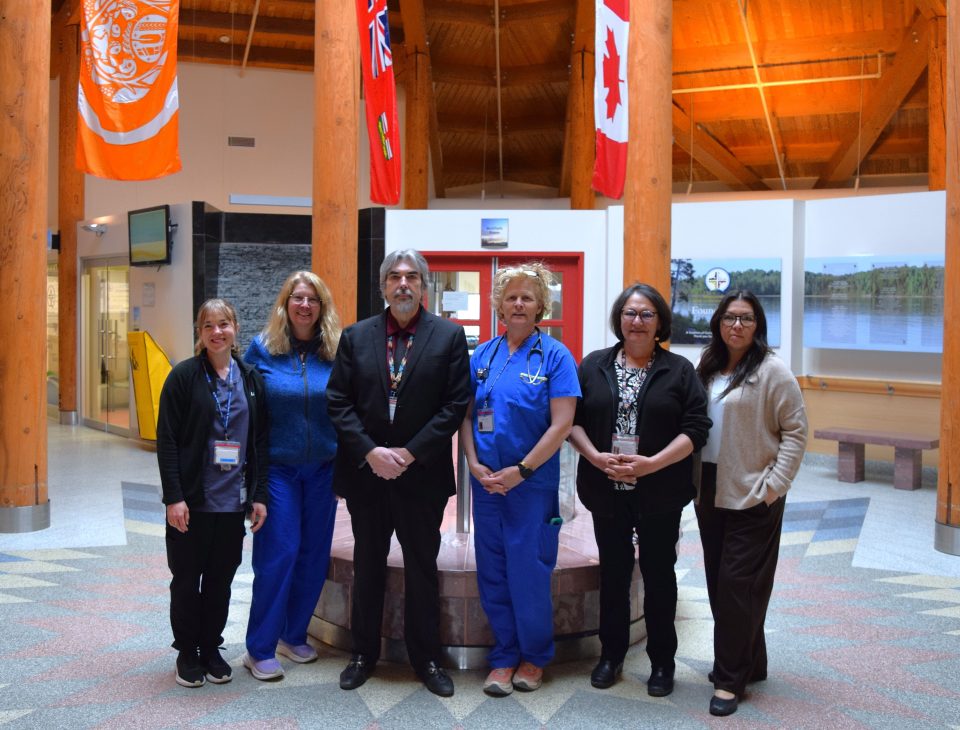
Sioux Lookout First Nations Health Authority (SLFNHA), Sioux Lookout Meno Ya Win Health Centre (SLMHC), and University Health Network (UHN) are proud to announce the signing of a Memorandum of Understanding (MOU) that formalizes a collaborative partnership to enhance cardiovascular care for First Nations communities in the Sioux Lookout region.
This partnership brings together regional and provincial expertise to address longstanding gaps in access to cardiovascular specialty services, particularly heart failure care, while supporting culturally appropriate, community-driven health solutions. Through this agreement, the Parties will work collaboratively to:
- Improve access to cardiovascular specialty services, including in-person clinics, telemedicine, and remote monitoring.
- Establish a sustainable, culturally safe model of heart failure care for First Nations communities.
- Strengthen local capacity through education, training, and knowledge-sharing between organizations.
- Use data and quality improvement approaches to better understand health trends, improve outcomes, and enhance patient and provider experiences.
- Advance community-based research initiatives aligned with First Nations priorities and appropriate ethical frameworks.
- Support patient and community education focused on prevention, treatment, and management of cardiovascular disease.
The collaboration will be supported through innovative care delivery models, including digital health tools and remote management programs, ensuring patients can remain connected to care teams while staying in their home communities whenever possible.
This partnership reflects a shared commitment to improving health outcomes and quality of life for individuals and families across the region, while addressing the higher rates of cardiovascular disease experienced by First Nations populations.
“This agreement represents what is possible when organizations come together with a shared purpose to improve the health and well-being of the communities we serve. For many First Nations in the Sioux Lookout region, access to specialized cardiovascular care has been a challenge for far too long. Through this partnership with SLMHC and UHN, we are building a stronger, more connected system of care that brings services to the communities, strengthens local capacity, and ensures care is delivered in a way that is culturally safe. This is an important step forward, and we are committed to continuing this work together.” — Sonia Isaac-Mann, President & CEO, SLFNHA
“SLMHC is extremely grateful for the partnership with UHN and SLFNHA to provide this much needed service to our region. Bringing services closer to home is always on the forefront. Having cardiac clinics in both Sioux Lookout and Sandy Lake will benefit the patients in our region and decrease travel and cost to access these services elsewhere, such as Toronto. This service has already had a positive impact to patients’ lives. UHN uses a digital health program that monitors your heart failure symptoms and connects you to the care team remotely. This is extremely important for our region, which encompasses a large geographic area with remote far north communities.” — Dean Osmond, President & CEO, SLMHC
“We are delighted to partner with SLFNHA and SLMHC to bring high-quality heart failure care to the Sioux Lookout region. This collaborative approach allows for culturally safe and responsive specialty care that is delivered closer to home, connecting the community to innovation from Toronto. This means earlier diagnosis, better managed heart failure, and a meaningful and ongoing relationship with First Nations peoples, SLFNHA, SLMHC, and providers in the region.” — Dr. Heather Ross, Cardiologist, UHN and TRANSFORM HF within the Ted Rogers Centre for Heart Research.
By aligning clinical expertise, regional service delivery, and community-based approaches, SLFNHA, SLMHC, and UHN are taking meaningful steps toward a more equitable and responsive healthcare system for First Nations in Northwestern Ontario.
© 2026 Sioux Lookout Meno Ya Win Health Centre